
Should Artists be Intimidated by Artificial Intelligence?
I tested ChatGPT as a working author and came away unimpressed — then used it to plan my ninth book. Here's the exact prompt and where I draw the line.

The short version
No, I'm not intimidated by AI — and I've spent real time testing what it can do.
AI is trained to find the most probable next word. I've trained myself to write in a way that resonates with the soul. Those aren't the same job.
My advice to intimidated writers: write better. Master your craft and the difference becomes obvious.
I won't let AI write my poems. I did use it to generate 100 prompts that became my ninth book — and the full prompt is below.
On this page
What happened when I tested it
AI is very good predictive text
My honest advice: write better
Where AI genuinely helps a writer
How I used ChatGPT to write my ninth book
Common questions
Over the past few years, I've been contemplating the impact artificial intelligence has had, and will continue to have, on the art space. I've asked myself whether I should feel intimidated by AI and its users, who can now generate poetry, stories, and entire novels at unbelievable speeds.
My short answer: no.
I'm not intimidated by AI, and I'm not bothered by its capabilities — a sentiment I know many artists and writers would not agree with. Here's why.
What happened when I tested it
I would be lying if I said I wasn't initially concerned about the ramifications of AI in the publishing world. But I have always been a very curious person, so I naturally tested what I could create with generative AI.
After messing around with ChatGPT for a bit, I was amazed. As a '90s kid, I grew up in that sweet in-between era before the internet, smartphones, and social media became so prevalent — when climbing trees was still cool. The young storyteller in me never imagined that with a well-worded prompt and a click of a button, I could instantly generate a story on whatever topic I chose.
I was impressed by what AI could do. But a big part of me also felt unimpressed. Maybe even disappointed.
AI is very good predictive text
I have been writing creatively and professionally for over ten years. Poetry. Stories. A novel. Many intelligence and police reports throughout my military and law enforcement careers. All this to say: I have slowly developed and refined my own writing style.
I've been influenced and inspired by select people — unlike AI, which is trained on unimaginably large datasets. Whereas I have trained myself to write in a way that can resonate with the soul, AI has been trained to identify the most probable combination of words to answer whatever you ask of it.
To dumb it down: AI is basically an extremely advanced, trained version of the predictive text software on your smartphone.
So why should I be intimidated by that? Yes, AI can create relatively elaborate stories. But can it emulate the human soul? Can it truly and accurately describe human emotion when writing dialogue between characters? Can it generate non-linear plots the way Christopher Nolan does when he directs Memento or Tenet?
Likely not — unless you give the AI an extremely elaborate prompt to work with. And even then, it would take a great deal of human editing to get the response anywhere close to a literary masterpiece.
AI is incredible in its current state and probably has the potential for much more. But I think it will always fall short of human creativity. I like the novelty of seeing what an algorithm generates if I ask it to write a story about a sasquatch visiting the moon on a rocket Uber with his yeti best friend. I also know whatever ChatGPT produces would not be mine.
I'd have to spend many hours on heavy editing to make it feel like something I wrote in my own style. The whole process seems slightly counterproductive — and honestly, I would still feel guilty for not writing the original content. So no, I'm not intimidated, because AI can't replicate the genuine emotion that feeds my writing.
My honest advice: write better
It may seem harsh of me to think this way, but here it is.
To writers who are intimidated by AI, I would say this: write better.
To artists intimidated by AI, I'd say the same in their field of specialization. Paint better. Draw better. Design better. Aim to be a master of your craft, and not only will you set your style apart from a lot of the slop people have been generating — you'll also learn to distinguish between what was created by a human and what was likely generated by a machine.
Something else worth thinking about. Resourceful people and lazy people will both find ways to make AI work for them. But many others will still require human creativity, simply because they aren't technologically savvy enough to use it. And there will be many more who outright refuse to support anything touched by AI, because they want to support real humans and their work. I understand both sides.
Where AI genuinely helps a writer
To summarize my thoughts: I believe AI has great potential, but I would not use it for generative writing.
As a writer, though, I think it can be an incredible tool for planning and brainstorming. Tools like Grammarly have also made AI a useful preliminary editing aid for grammar and spelling — though I'd still recommend having any work reviewed by a professional editor before publishing.
Will I have AI write out my stories or poetry? No. Can I have it generate a list of 100 writing prompts to spark some ideas? Absolutely.
In fact, I did exactly that.
How I used ChatGPT to plan my ninth book
I recently finished writing my ninth book, another poetry collection. This one took me a little over a year — but in my defense, I had a lot going on. I became a father.
Although I love being a dad, the new title comes with the reality that I rarely have time to sit quietly and contemplate new ideas for writing. I knew I wanted to write another poetry collection, but I was struggling to feel inspired. So I decided to experiment.
Here is the exact prompt I gave ChatGPT:
The prompt I used
Give me 100 poem-writing prompts for a poetry collection titled Paradise. The book is divided into three equal parts. Part 1 focuses on the hurt that drives one to seek paradise. For example, heartbreak, loss, and disillusionment are themes in this section of the book. Part 2 focuses on the journey to paradise. For example, learning to cope with past hurts, cultivating curiosity about life, and embracing hope are themes explored in this section of the book. Part 3 focuses on the arrival in paradise and the experiences found there. For example, themes such as finding love again, self-realization, or building a family are explored in this book section.
Sure enough, I received 100 one-line prompts, each giving me an idea to ponder until I could write a poem on my own. I didn't like every prompt, so I didn't follow each one — but they ultimately inspired me to write something, even when what I wrote was unrelated to the prompt.
As I said, it took a little over a year. I created my latest Spanish poetry collection, Paraíso: Poemas de amor y la vida, by consistently completing at least one writing prompt every other day.
AI is a fantastic tool if you know how to use it.
Try it yourself
If you're seeking writing inspiration, submit the prompt above to ChatGPT and see what you get. If the genre isn't your style, edit it — swap "Paradise" for your own theme and rewrite the three parts to match the arc you want.
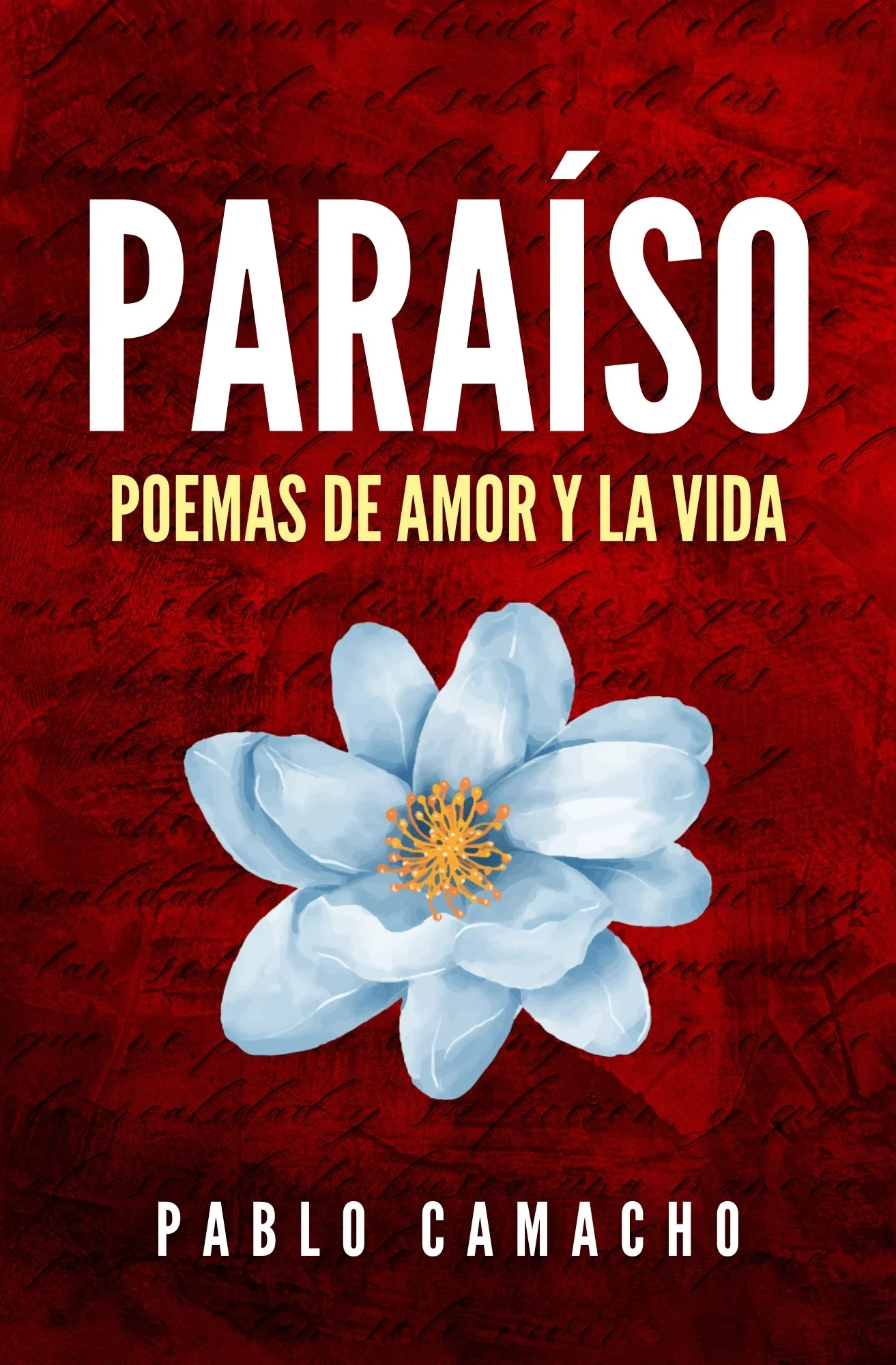
The final book and the prompts behind it
The finished collection is Paraíso. If you'd like to see the specific one-line prompts I used and how each part of the book was segmented, I include all of it in my online poetry course — where sharing your collected writings is the final project.
Common questions
-
It can generate something shaped like a poem. AI is trained to identify the most probable combination of words to answer what you ask of it — essentially an extremely advanced version of the predictive text on your phone. What it can't do is emulate the human soul behind the writing.
-
No. My advice to writers who feel intimidated is to write better. Aim to be a master of your craft, and your work will stand apart from generated content on its own.
-
I wouldn't use AI for generative writing and publishing content I didn't write. But AI is an excellent tool for planning and brainstorming, and tools like Grammarly are useful for preliminary editing.
-
Ask for a set of one-line prompts structured around your collection's themes and sections. I requested 100 prompts organized into three parts for Paraíso, then wrote every poem myself, using each prompt only as a starting point.

Meet the author
Born in Caguas, Puerto Rico, raised in a military family, and a former U.S. Marine. He is the author of more than eight books in English and Spanish and is currently writing his first horror stories. He lives in Florida with his wife and daughter.